One Night in October

Nuit Blanche 

The sun’s glow is long gone, yet I’ve never seen Toronto so busy. As I round the corner at the intersection of McCaul and Dundas Street, anticipation and the early October breeze send chills through my body. It’s my first time at Nuit Blanche, and I’m already overwhelmed by the crowds of people and large installations that fill the street. I notice a plastic bag tangled in the branches of a Linden tree and wonder if it’s one of the installations. 

Up ahead, the red lights of Chinatown draw me in like a moth. I follow them to a large electronic board towering over the street. It shines red, blue, and yellow indiscernible text, and I spend several minutes wondering what it means. Nearby, a giant inflatable screen plays a film on loop, and a long line forms behind it at an interactive walk-through exhibit. I scan the street for what’s next, but I quickly realize that aside from the glow of neon lights and the six poutine trucks that line the street, there’s nothing else to see in this area. 

I unfold the map, the front bearing a glowing orb with the text simply stating “Nuit Blanche 2025. Oct 4, 7pm-7am”. Where to next? I wonder. The Annex? Trinity Bellwoods? Harbourfront? I scan the map in search of my next spot, and there is a lot to choose from; large installations and smaller works span all corners of the map, but I decide to stick to the downtown core and follow the crowd wherever it takes me. 

By the end of the night, I’ve splashed paint on a canvas feet away from a wrestling match, drawn pictures of dogs in the basement of an art gallery, and filled up my camera roll with photos of all the absurdity. I go home feeling satisfied and exhausted, still wishing I could stay up till dawn to see every piece Nuit Blanche has to offer. I wonder if I’ll wake up tomorrow and see a post on social media about something super cool I completely missed. I’m certain I will. 

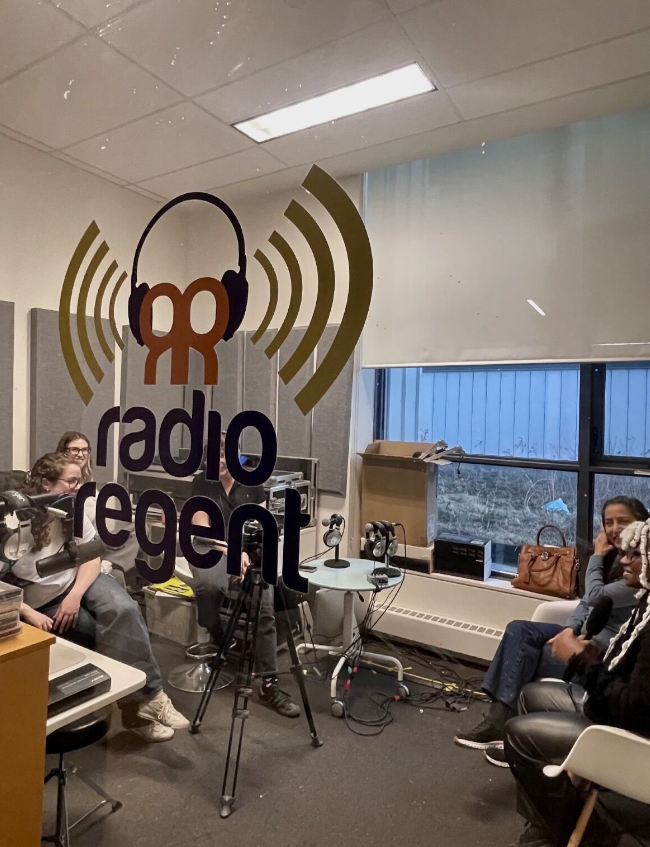
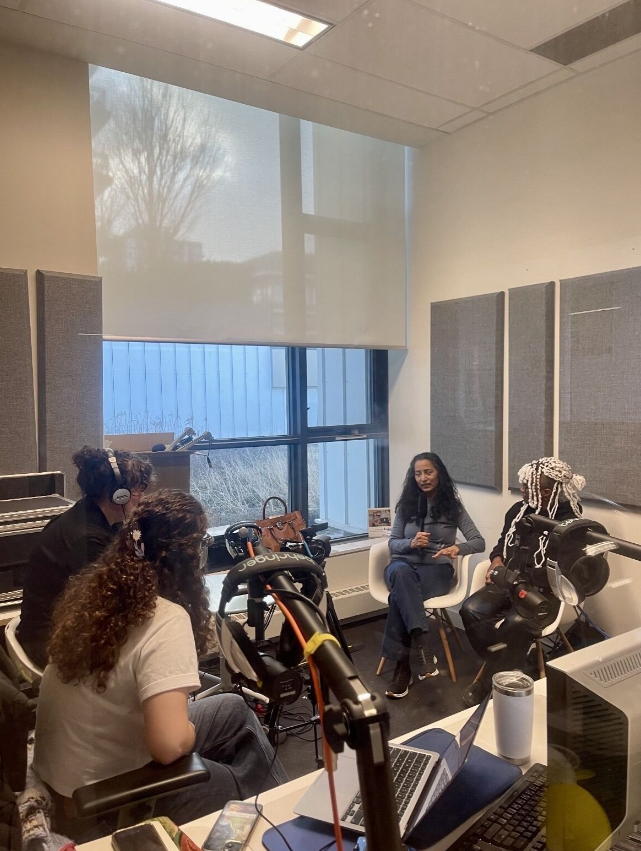
That was October 2025. Now, I sit in a studio, my group member Andrea to my left and Caitlin to my right. The light on the video camera blinks red, signaling that recording is in progress. After weeks of uncertainty, bouncing between topics, and fearing we may never settle on something meaningful, we finally sigh with relief as we turn off the camera, concluding our interviews for the documentary. 

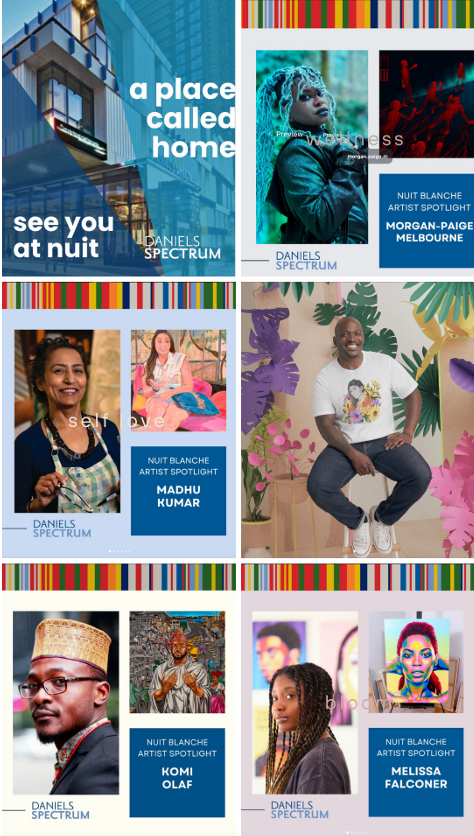
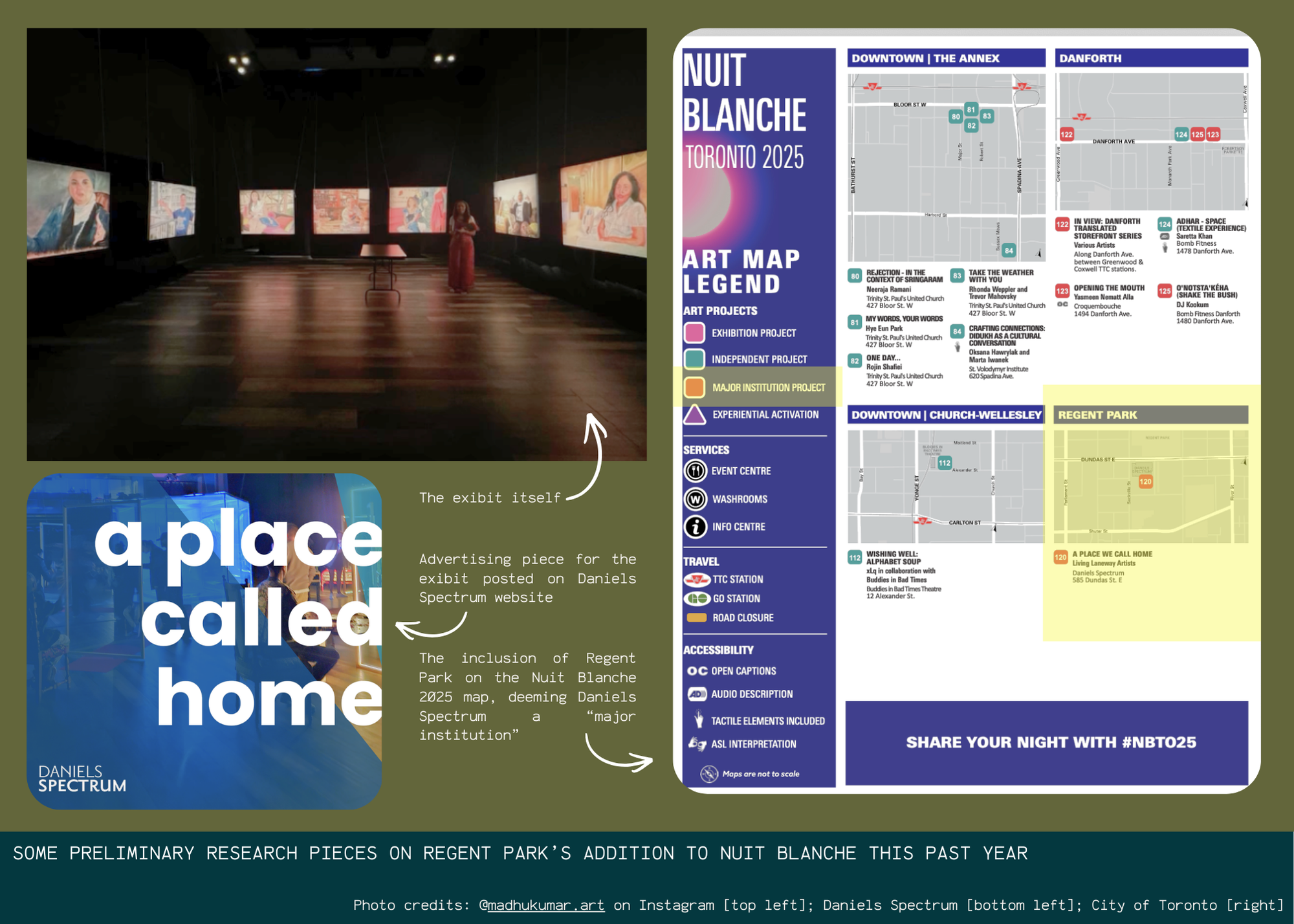
Morgan-Paige Melbourne and Madhu Kumar are part of the group of artists behind A Place We Call Home, an installation held at our very own Daniels Spectrum last October. The other artists, Benny Bing, Melissa Falconer, and Komi Olaf, we weren’t able to interview due to timing. A few weeks ago, when I found out about this installation, I was surprised to learn that Regent Park had been included in Nuit Blanche, as I didn’t remember seeing it on the map months earlier, but of course, when I went back and looked, there it was, number 120. Learning about this project made me realize that, even months later, I was still discovering the amazing exhibits I had completely missed. 

What’s Next for “Stories Told” 

Prior to the interview, we planned to center the discussion around the revitalization of Regent Park. We thought perhaps the artists might feel that the sense of culture lost through the revitalization could be saved through art, or that maybe Nuit Blanche only approved a Regent Park installation because of the revitalization. However, we quickly found out that both of our interviewees had moved to Regent Park recently and didn’t know much about Regent Park pre-revitalization. At the same time, we were pleasantly surprised at how much they said they felt welcomed in the community, that the culture is still alive and well, at least in the artistic spaces they’re surrounded by.  

While they expressed a need for more artistic exposure, they said Nuit Blanche was a great step in the right direction. They both expressed admiration and thanks towards Daniels, saying they were grateful for what Daniels Corporation has done for the community and the opportunities Daniels Spectrum has presented to artists and community members alike. 

Morgan’s work for A Place We Call Home created an immersive experience through sound art. Madhu, an oil painter, documented immigrant women’s experiences through her paintings, accompanying them with text and audio of the women sharing their stories. Although both artists are based in Regent Park, they emphasized that their work is not limited to the neighbourhood. They both aim to reach the broader Toronto and global community and want to share stories from all over the world. 

Hearing the artists talk about their art and experience with Nuit Blanche really moved me. As an artist myself, just starting to branch out into the world of public exhibitions, I was inspired by their stories of creative processes and how they emphasized the role of community in creating their work. 

So, what’s next for our documentary team? Well, things are finally moving along, and we’re excited again. Inspiration has struck, and we are delighted to have had the chance to interview Morgan and Madhu. We’re now working towards editing a first draft for our next class and conceptualizing a physical media piece that can connect to our topic and pay homage to the neighbourhood of Regent Park and the role of art in the community. 

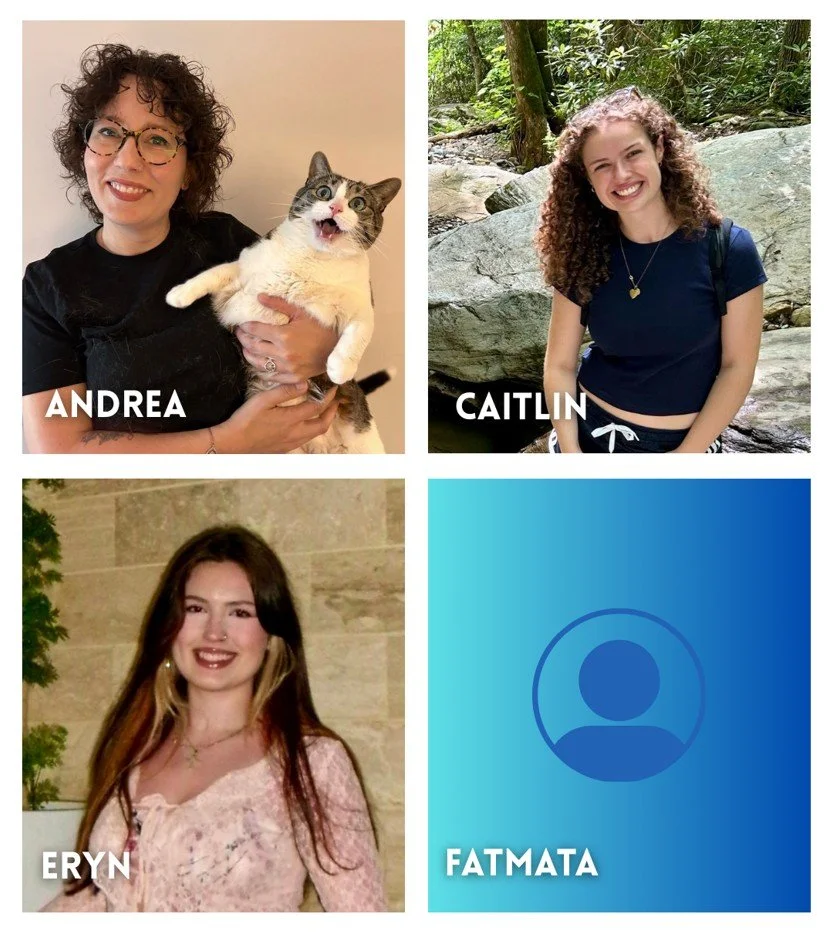
The team members of Store-ies are Eryn McDevitt, Andrea Jakaitis and Caitlin Devion.
Stories Told: a pivot 

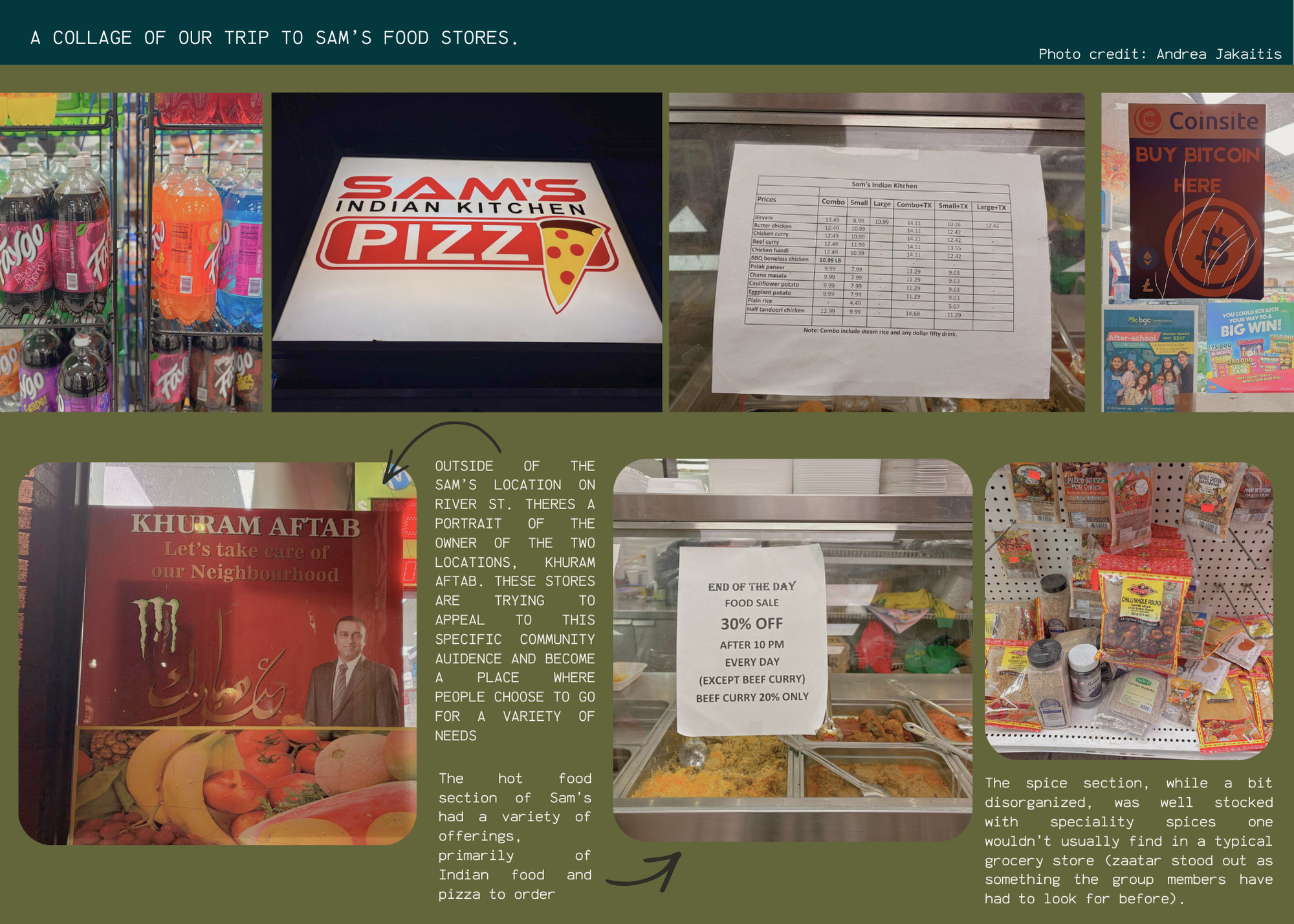
Image 1: Collage of our trip to Sam’s Food Store on River St

Image 1: Collage of our trip to Sam’s Food Store on River St 

Our research

After class on Thursday evening, our group took to the streets to investigate the Sam’s Food Store location on River St. as a potential focus for our documentary. Sam’s on River St. is a 24-hour convenience grocery store with a variety of halal hot food options and a unique combination of items for sale (bedsheets stuck out to us as something we do not typically see in stores of this nature). As we roamed the aisles, questions about how decisions on stock are made, what the loss prevention strategies are, and how the ready-made food offerings fit into the cultural context of Regent Park became topics of conversation between us. After chatting with the cashier and finding out when the owner, Aftab Khuram, is around, we made our way to Rabba, which is within sight of Sam’s. Rabba is another chain of 24-hour convenience grocery stores and a direct competitor of Sam’s. It was there that we ran into one of our classmates, Ali, buying two shawarmas from the Rabba hot food counter (one for dinner and one for lunch). The selection at Rabba similarly caters to the diversity of the community as Sam’s does, displaying a variety of halal options, from rice-stuffed vine leaves to poutine.

Video: Collage of our trip to Sam’s Food Store and Rabba down River St. (Video credit: Eryn McDevitt)

The pivot 

We reconvened after taking a few days to think and discussed refining our question. Could Sam’s be the lens through which we explore the differences between the old and new layouts of Regent Park, trying to see what explains shifts in the community’s identity? What is Sam’s to the community, if anything? We were losing steam. In all honesty, the members of our group were not excited about this project. We felt as though we were continually running into barriers, even during the brainstorming phase. We needed to pivot. We decided to return to what originally united this group: art. 

Something new: Stories Told 

2025 was the first year there was a Major Institution Project, and the second year there were exhibits at all in Regent Park for Toronto’s annual city-wide nocturnal art festival Nuit Blanche. The exhibit was in the very building where we have class every week, and some of the artists are still there on a regular basis to use the studio space. One of them, Benny Bing, was even an interviewee for one of last year’s projects (See The Artists from 2025). 

The exhibit, titled A Place Called Home, featured five contributing artists (Morgan-Paige Melbourne, Benny Bing, Melissa Falconer, Komi Olaf, and Madhu Kumar), as well as the Community Music Schools of Toronto. The exhibit seeks to highlight “hidden voices that shape the city’s cultural fabric” (Daniels Spectrum, 2025). We found this incredibly powerful and highly relevant to our class, as it foregrounds community voices that are often marginalized in narratives about urban redevelopment. Nuit Blanche’s 2025 theme was “Translating the City,” and this exhibit is a force acknowledging that the community voices of Regent Park have been hidden under marginalization and displacement within the mainstream cultural landscape of Toronto. 

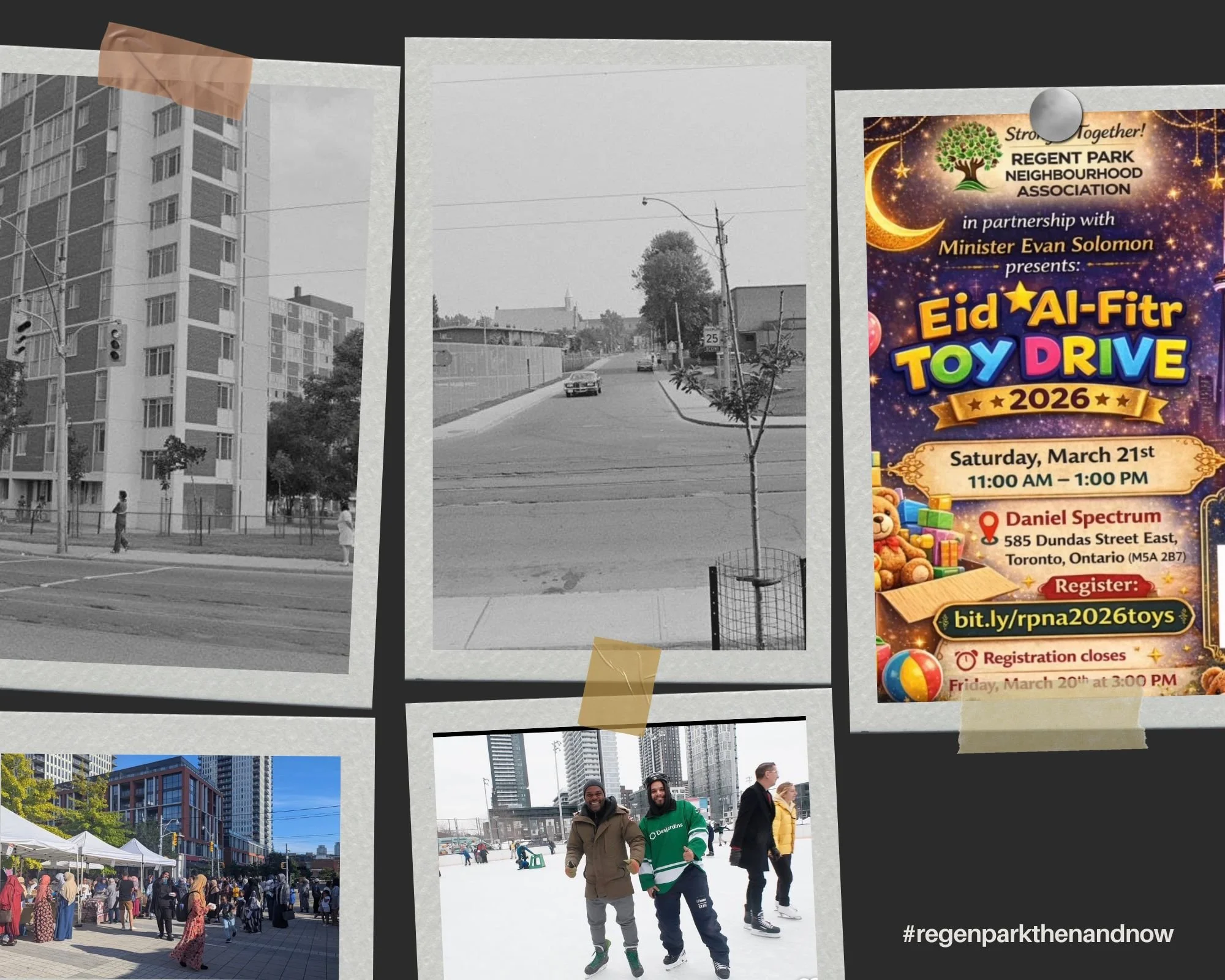
Regarding the revitalization and the changing nature of the neighbourhood, this exhibit acknowledges the rhetoric of Regent Park’s identity being “lost” through the process of revitalization. It’s hard not to think this way; the revitalization completely changed the physical landscape of the neighbourhood, almost as though the old Regent Park was leveled and then rebuilt from unspecific puzzle pieces made of market-rate condos and luxury fitness studios. Our group believes that A Place Called Home responds with the fact that Regent Park’s identity is not lost. The community remains, and maybe you’re just not seeing it—it’s there in the art. While the streetscape has changed, these stories are continuing to be told through art. Rather than telling the story of something that is no longer there, our group is hoping to tell the story of what is in Regent Park now. 

Using A Place Called Home as our lens, our group’s new research question is: In what ways does art reveal Regent Park’s identity despite the homogenizing effects of revitalization?

Image 2: Some preliminary research on Regent Park’s addition to Nuit Blanche, 2025 

Our format 

The documentary will center on interviews with artists involved in A Place Called Home who are also members of the Regent Park community. These interviews will explore how the artists understand their own identities and how their creative work reflects and shapes the identity of Regent Park. The film will combine interview footage with scenes of the neighbourhood and the Daniels Spectrum studio spaces to situate the artwork within its community context. Through these conversations, the documentary will hopefully highlight how art acts as a medium through which community stories, histories, and identities continue to be expressed alongside the neighbourhood’s ongoing revitalization.  

Production / Implementation Plan 

During the week, we are focusing on researching and contacting the artists who made A Place Called Home. By Tuesday, we will begin reaching out to artists to request interviews. Later in the week, we will develop a list of interview questions focused on artist identity, community connection, and perceptions of Regent Park’s changing landscape. Once participants confirm, we will schedule interviews and begin filming on-site at Daniels Spectrum and around Regent Park to capture contextual footage. 

References 

Daniels spectrum named Major Institution for Nuit Blanche 2025. Daniels Spectrum. (2025, September 18). https://www.danielsspectrum.ca/daniels-spectrum-named-major-institution-for-nuit-blanche-2025 

The team members of Store-ies are Eryn McDevitt, Andrea Jakaitis, Fatmata Bakarr and Caitlin Devion.

Store-ies Untold

Meet the Team

Meet the researchers behind Store-ies: Andrea, a fourth-year Peace, Conflict and Justice student with 15 years of experience working in social services; Caitlin, a fourth-year Urban Studies and Geographic Information Systems (GIS) student; Eryn, a fifth-year Environmental Studies and Urban Studies student; Fatmata, a third-year doctoral candidate in the Social Justice department at OISE, University of Toronto, and a Regent Park resident. 

Together, our team aims to explore the untold store-ies of Regent Park. Our play on words combines “store” and “stories,” inspired by how the physical streetscape of stores, businesses, and community spaces shape identity in the neighbourhood. 

More specifically, our guiding research question for the mini-documentary is: What differences between the old and new layouts of Regent Park help explain shifts in community identity? 

Although our question may evolve as we progress further into the planning process, the core of our exploration remains focused on Regent Park’s identity, how it has changed throughout redevelopment, and how the proposal language and promises made during the development stages compare to reality. We also want to examine how redevelopment is perceived by residents today.

About Our Theme 

We want to explore the potential disillusionment that may have come about from the replacement of locally owned businesses, ethnic grocery stores, and convenience shops with chain stores and high-end retail. How has this impacted the community? Who does it benefit? Who does it exclude? 

We are still figuring out how to approach this in a way that captures the overall community while recognizing our time and research limitations. We do not have the capacity to trace every business that has ever existed in Regent Park. Instead, we hope to connect with residents and hear their stories about what made Regent Park “iconic.” What were the shared spaces everyone used or knew about? And how has their disappearance or adaptation shifted both community and individual identities? 

The Downtown East Identity 

Due to limited time and our lack of in-depth knowledge about other Downtown East neighbourhoods such as Cabbagetown, St. James Town, and Moss Park, we decided to focus solely on Regent Park. Regent Park contributes greatly to the overall identity of Toronto’s Downtown East. When people think of redevelopment in Toronto, they think of Regent Park. 

Its redevelopment also impacts adjacent neighbourhoods by increasing housing market value and shaping public perceptions of surrounding areas simultaneously. Because our course is centred on Regent Park, we are concerned that extending our research to other neighbourhoods without having had the same level of engagement could result in oversimplification or reliance on assumptions. 

With limited time to plan, we want to avoid applying stereotypes under pressure, especially since misrepresentation of Regent Park is an issue the course aims to address. We do not feel we could do those neighbourhoods justice, and feel better suited to focus our research on Regent Park because we have a resident in our group, and our other three members have a more in depth academic and personal understanding of the neighbourhood. 

Project Progress 

So far, our group has established our focus area and refined our research question. We initially struggled to narrow our topic, originally looking into art and public displays but had trouble finding leads on such works. Now we have shifted our project to capture the community identity that emerges through communal and commercial spaces. We are still making final adjustments, but after several Zoom meetings, we have made progress and are excited to begin planning our documentary. 

The team members of Store-ies are Eryn McDevitt, Andrea Jakaitis, Fatmata Bakarr and Caitlin Devion.