
This week, our group continued conducting interviews with members in Regent Park with leadership roles in various Mosques in the community. While our original plan was to focus on many faith institutions in the area including Churches and Temples, we finally decided that it might be easy to focus only on various Mosques in the community. One of the reasons we decided to do this was because we were having a lot of ease in connecting with Muslims in leadership positions in the neighbourhood. Although we did not have any direct contacts with Masjidur Rahmah, getting an interview with the Imam was surprisingly easy. Masjidur Rahmah was built on a previous commercial and residential property purchased in 2012 and the Muslim community donated nearly all the funds for the entire project (Central Toronto Islamic Foundation, n.d.). Upon visiting the Mosque, Nashat came to realize that the Mosque was situated in a very Bangladeshi cluster within Regent Park which Sama had previously informed us about. Through speaking with some of the community leaders upon our visit in Bangla, Nashat was able to build a stronger connection and trust with these leaders and allowed us to secure an interview with the Imam with ease.
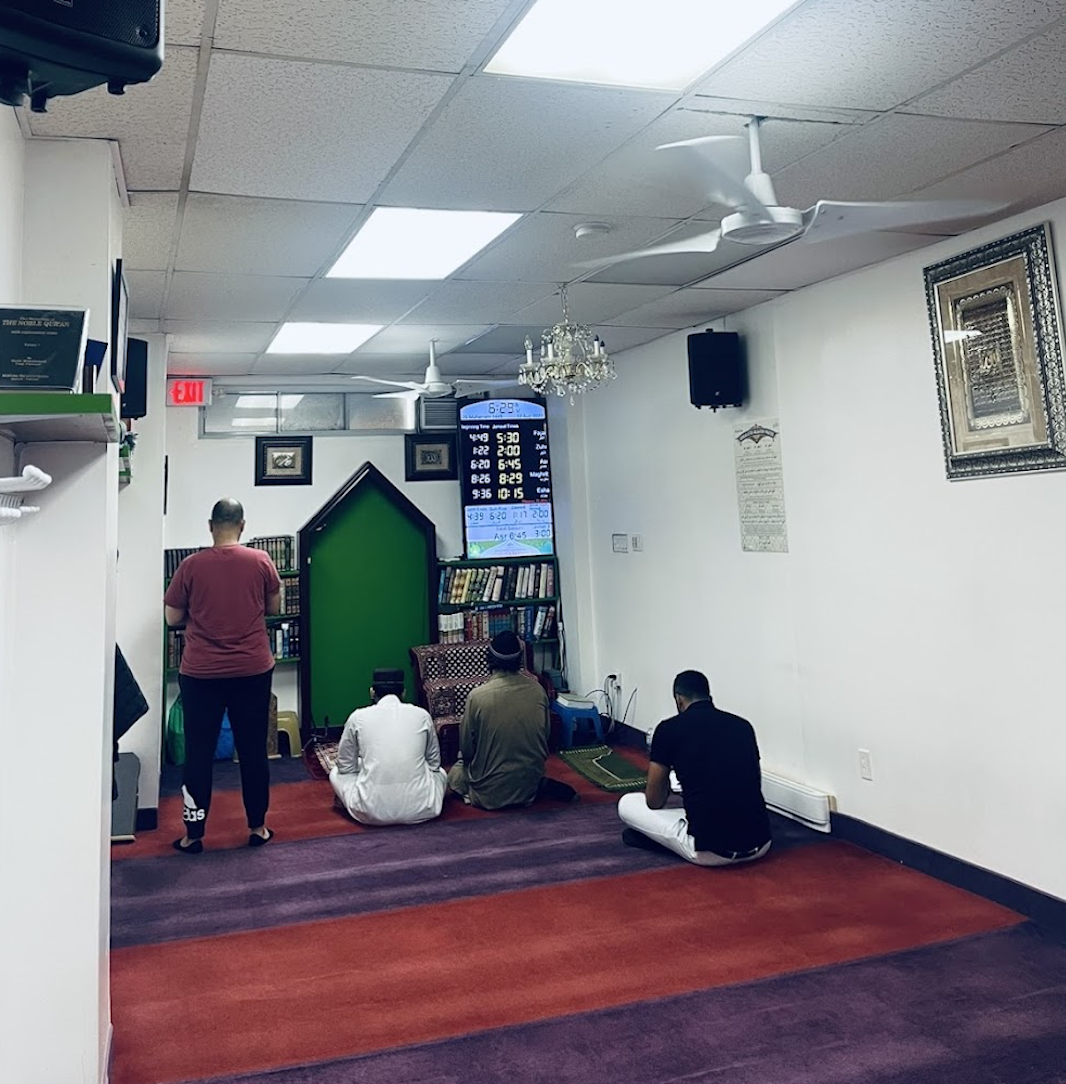
Image of Masjidur Rahmah interior
On the flipside, our group faced barriers trying to contact the Church and the Temple due to unavailability and time constraints. Ultimately, we currently have almost two hours of footage of in depth interviews to sift through and felt that although it would be super cool and insightful, interviewing various faith groups may pose a challenge in regard to our ability to do justice in conveying novel findings across all institutions in both the documentary and final research paper with the short time that we have left for carrying out the project.
Our first interview this week was with Maruf Hussain, a younger Imam in the Regent Park community who helps facilitate many of the Islamic programs at Masjid Omar bin Khatab. Maruf grew up attending and leading prayers in various other mosques in the community, including Masjidur Rahmah and many of the basement Mosques as well.
One of the statements that were particularly interesting during this week's interview with Maruf was his insight on the displacement of Islamic scholars in the community amidst redevelopment. While we were discussing issues related to the decline in youth attending programs at Masjid Omar Bin Khatab, Nashat was curious to know whether this was due to many of the Imams being a bit older, perhaps leading to a generational divide between the Imams and the youth. However, Maruf affirmed that it was not age which acted as a barrier, but was rather the displacement of well revered scholars in the community which led to the declining demographic of youth in the mosque. In support of this argument, Maruf provided the example of a scholar who was an Imam at Masjid Omar Bin Khatab. Despite his age, he had a very good connection to the youth in the community and amidst the redevelopment of Regent Park, he began experiencing issues with being able to continue affording rent which led him to move to Turkey. While moral, mental, spiritual and communal support is often facilitated by scholars in the community, the redevelopment seems to have led to the loss of these support systems for the youth in Regent Park.
This week we also have an interview set up by Sama with a woman who was displaced from Regent Park and attended Masjidur Rahmah frequently. Aside from interviews, Tracy has been doing an amazing job at making sure we are always strapped with recording equipment and directing interviewees when it comes to their style of answering questions for the documentary. Overall, we have also been taking really nice B-Roll shots of the community to improve our story telling in the documentary connecting it to the broader Downtown East identity and are excited to begin editing soon!
References
Central Toronto Islamic Foundation. (n.d.). Our history.
https://centraltorontoislamicfoundation.com/our-history/
The team members of Resilience and Faith are Tracy Ikpekhia, Sama Abbas and Nashat Nawar.