Scheduling Interviews at Masjidur Rahmah and Insightful Findings from Masjid Omar Bin Khatab to Share

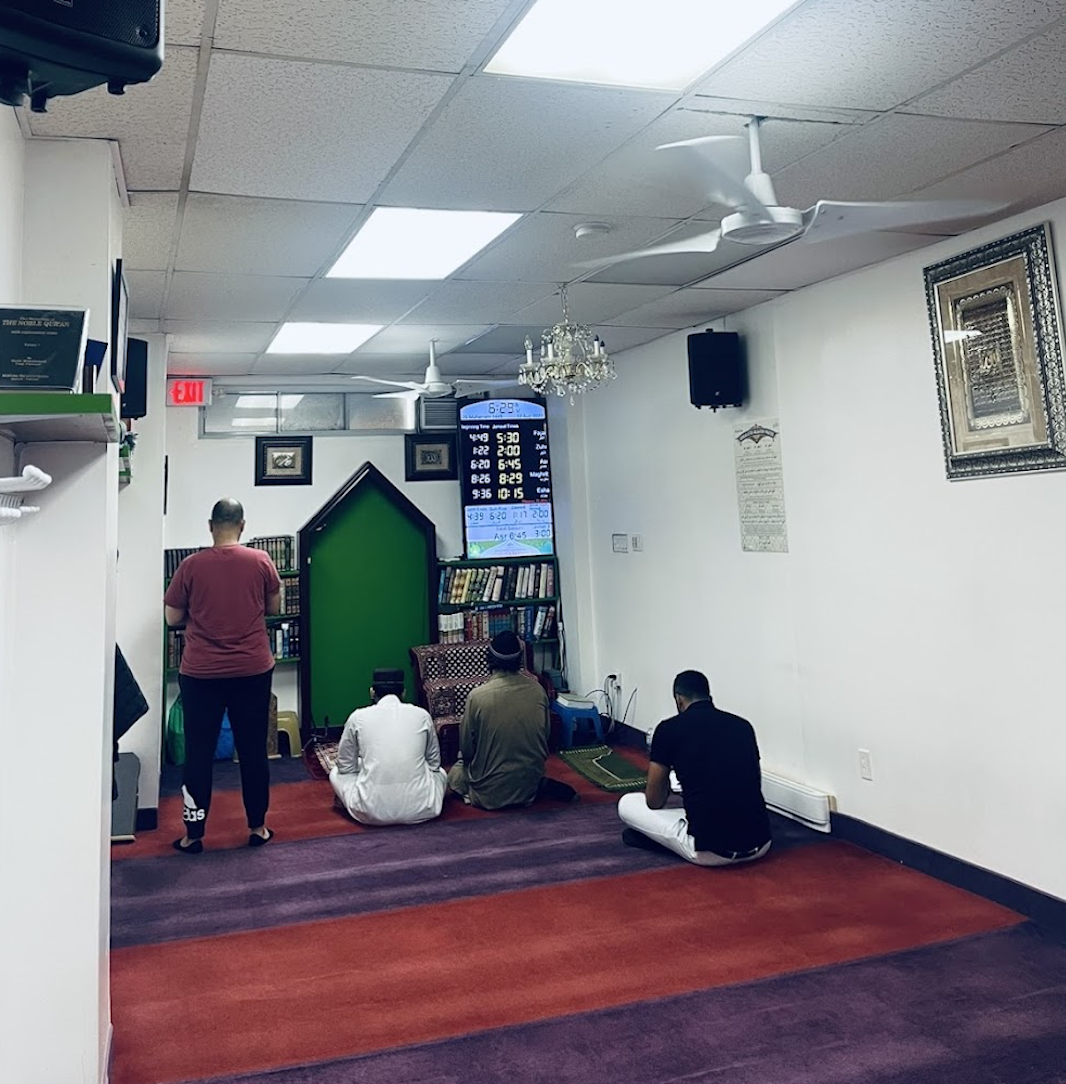
This week, our group continued conducting interviews with members in Regent Park with leadership roles in various Mosques in the community. While our original plan was to focus on many faith institutions in the area including Churches and Temples, we finally decided that it might be easy to focus only on various Mosques in the community. One of the reasons we decided to do this was because we were having a lot of ease in connecting with Muslims in leadership positions in the neighbourhood. Although we did not have any direct contacts with Masjidur Rahmah, getting an interview with the Imam was surprisingly easy. Masjidur Rahmah was built on a previous commercial and residential property purchased in 2012 and the Muslim community donated nearly all the funds for the entire project (Central Toronto Islamic Foundation, n.d.). Upon visiting the Mosque, Nashat came to realize that the Mosque was situated in a very Bangladeshi cluster within Regent Park which Sama had previously informed us about. Through speaking with some of the community leaders upon our visit in Bangla, Nashat was able to build a stronger connection and trust with these leaders and allowed us to secure an interview with the Imam with ease.  

Image of Masjidur Rahmah interior

On the flipside, our group faced barriers trying to contact the Church and the Temple due to unavailability and time constraints. Ultimately, we currently have almost two hours of footage of in depth interviews to sift through and felt that although it would be super cool and insightful, interviewing various faith groups may pose a challenge in regard to our ability to do justice in conveying novel findings across all institutions in both the documentary and final research paper with the short time that we have left for carrying out the project.  

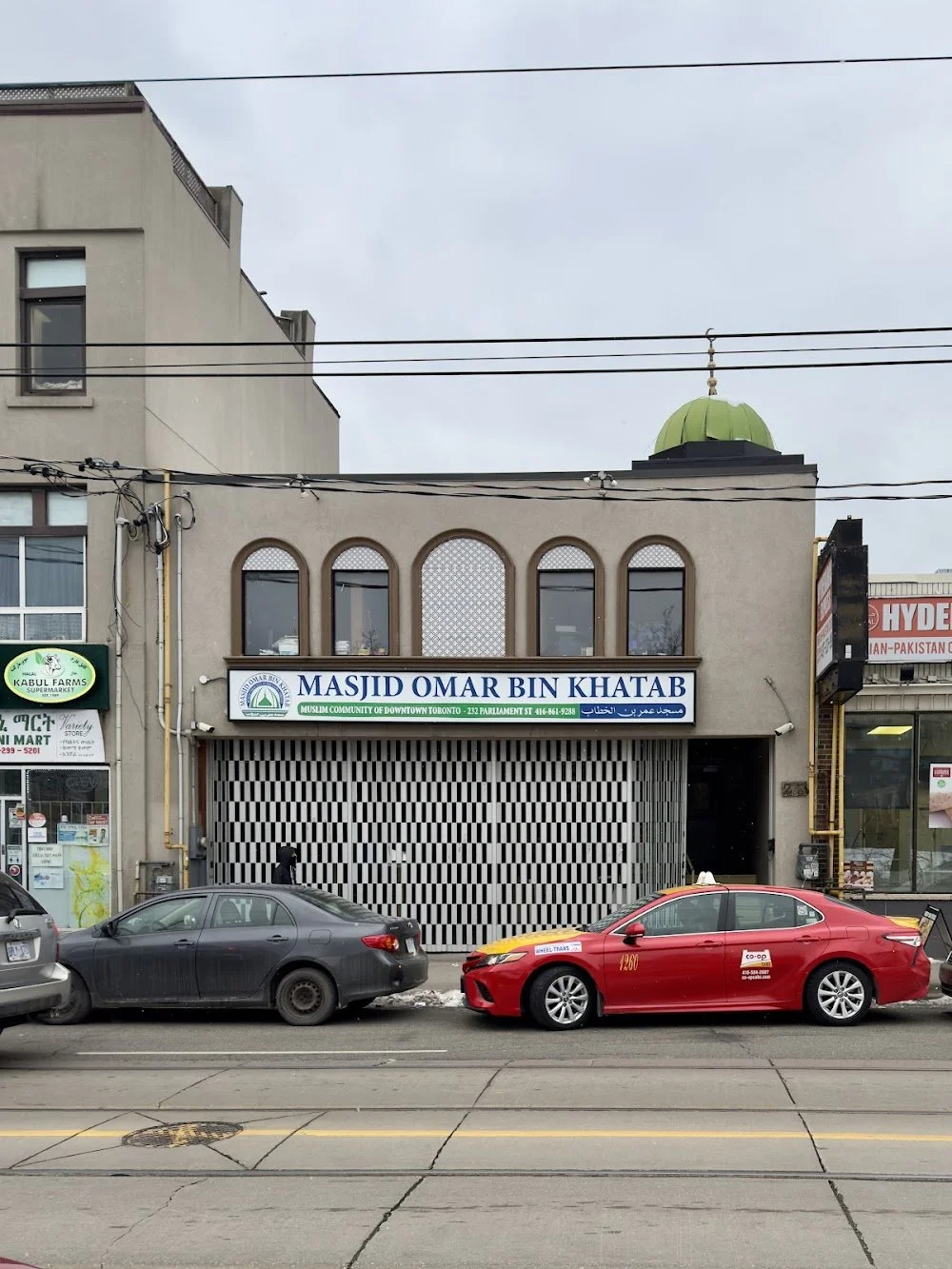
Our first interview this week was with Maruf Hussain, a younger Imam in the Regent Park community who helps facilitate many of the Islamic programs at Masjid Omar bin Khatab. Maruf grew up attending and leading prayers in various other mosques in the community, including Masjidur Rahmah and many of the basement Mosques as well.   

One of the statements that were particularly interesting during this week's interview with Maruf was his insight on the displacement of Islamic scholars in the community amidst redevelopment. While we were discussing issues related to the decline in youth attending programs at Masjid Omar Bin Khatab, Nashat was curious to know whether this was due to many of the Imams being a bit older, perhaps leading to a generational divide between the Imams and the youth. However, Maruf affirmed that it was not age which acted as a barrier, but was rather the displacement of well revered scholars in the community which led to the declining demographic of youth in the mosque. In support of this argument, Maruf provided the example of a scholar who was an Imam at Masjid Omar Bin Khatab. Despite his age, he had a very good connection to the youth in the community and amidst the redevelopment of Regent Park, he began experiencing issues with being able to continue affording rent which led him to move to Turkey. While moral, mental, spiritual and communal support is often facilitated by scholars in the community, the redevelopment seems to have led to the loss of these support systems for the youth in Regent Park. 

This week we also have an interview set up by Sama with a woman who was displaced from Regent Park and attended Masjidur Rahmah frequently. Aside from interviews, Tracy has been doing an amazing job at making sure we are always strapped with recording equipment and directing interviewees when it comes to their style of answering questions for the documentary. Overall, we have also been taking really nice B-Roll shots of the community to improve our story telling in the documentary connecting it to the broader Downtown East identity and are excited to begin editing soon!   

References 

Central Toronto Islamic Foundation. (n.d.). Our history.  

https://centraltorontoislamicfoundation.com/our-history/ 

The team members of Resilience and Faith are Tracy Ikpekhia, Sama Abbas and Nashat Nawar.
Smooth Sailing

I will stay up through the morning, I'll be on my knees 
My God, I can't sleep without you guiding my dreams 
I can't draw you, I can't paint you, my eyes are weak 
Tell me what to think, tell me what to see 
I'll go anywhere to bring you closer to me 
I'll go anywhere, I'll go anywhere 
I'll go anywhere to bring you closer to me 
I'll go anywhere, I'll go anywhere 
- Mustafa the Poet, I’ll go Anywhere 

Last week, our group sat down to review and further develop our interview questions. We were off to a great start, but our questions weren’t quite there yet.  For our group in particular, each one of us were a bit worried that “Faith and Displacement” might not be a relevant enough topic that the volunteers and faith leaders at Masjid Omar Bin Khatab have dealt with. In the case that our interviewees may not have an answer to our questions, we were prepared to pivot our topic based on other challenges related to Regent Park they would note. With the help of Professor Mehta, we were able to use her feedback to strengthen our questions and prepare for the interview on Sunday.  

Conducting interviews is often perceived as a simple task, but researchers have found that they are actually very hard to do well (Cairns-Lee et al., 2022). In fact, interviewing is not just the employment of the everyday skills of conversation, but are complex discussions involving impression management, meaning-making, and the application of cultural scripts, with interviewers acting as an asset to the trajectory of the depth of discussion findings (Cairns-Lee et al., 2022).  In an attempt to minimize distorting effects on research findings, a researcher should continuously take reflexivity into account, reflecting on the ways in which they have influenced the outcome of interview findings (Cairns-Lee etal., 2022).   

Nashat knew the participant through a mutual contact. Before the interview, Nashat explained the project on a phone call, built rapport, and sent the questions in advance. As a result, the participant felt comfortable sharing her perspective. Belonging to the same faith group, there was a point at which Nashat felt as if the interviewee may have been speaking a bit too general about faith rather than providing specific examples from the Islamic paradigm, which we think was due to her understanding that we wanted to capture interfaith perspectives. With a simple nudge indicating that it would be okay for her to be a bit more personal with her answers, the findings became even more meaningful and interesting! 

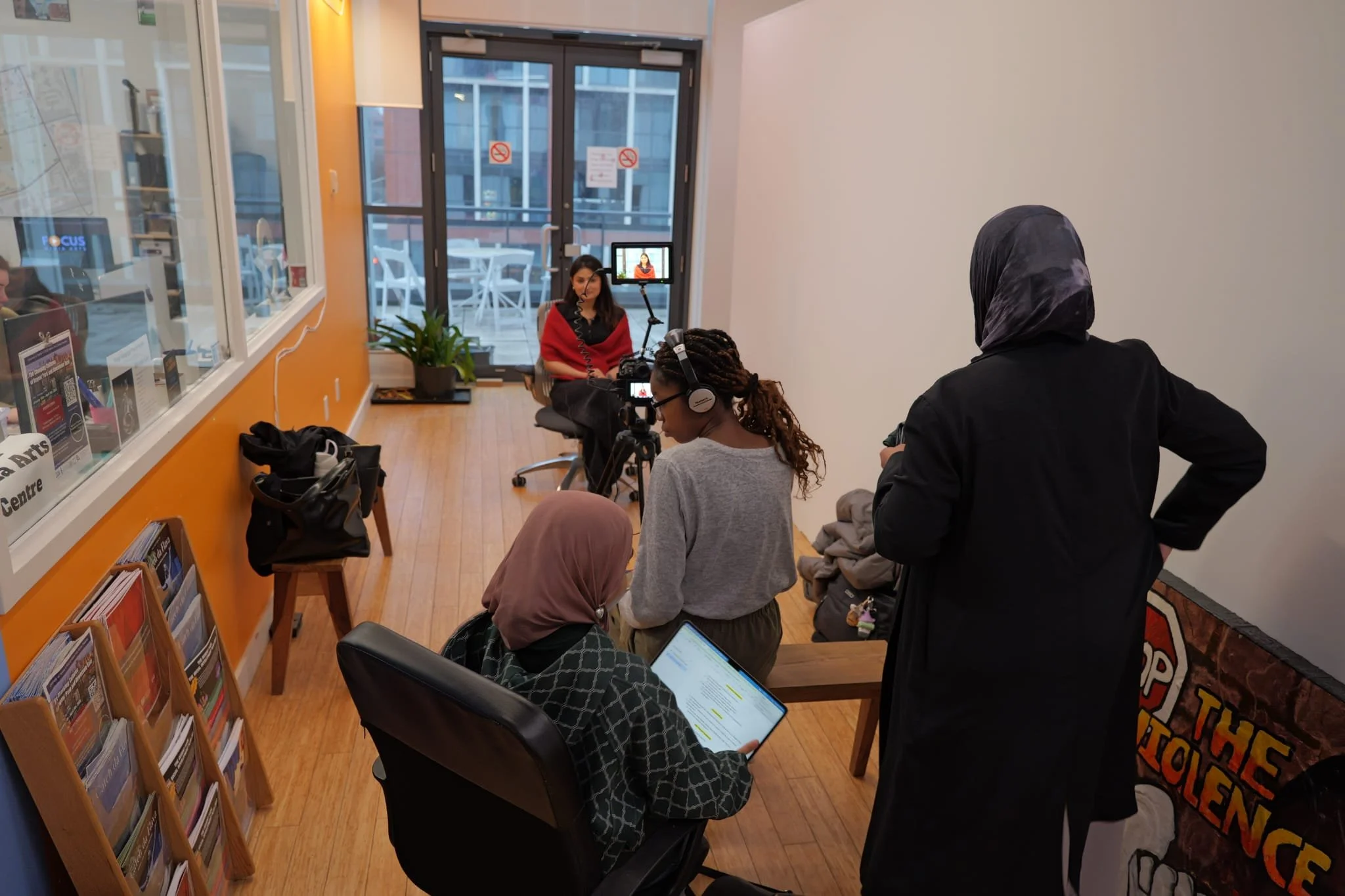
The interview turned out to be a great success! Tracy helped with setting up the camera, recording, and monitoring the audio and video while Nashat and Sama took turns asking the interviewee questions. The semi-structured interview went smoothly; Nashat and Sama were so invested that more questions outside of the initial questions were being asked. The interviewee gave us a lot of information and knowledge about Masjid Omar Bin Khatab, displacement in the community, and her role at the mosque as well.  

One of the very insightful findings we were able to uncover in the interview was the fact that amidst displacement there was a notable shift in mosque attendees. While some tenants continued to attend Masjid Omar bin Khatab even after being displaced, others were forced to find new places of worship in the community such as Masjid Toronto (Dundas and Adelaide locations) which is a prominent mosque in Downtown Toronto connecting to the broader theme of the Downtown East identity. For some, however, the displacement meant the complete erosion of the community they built.  

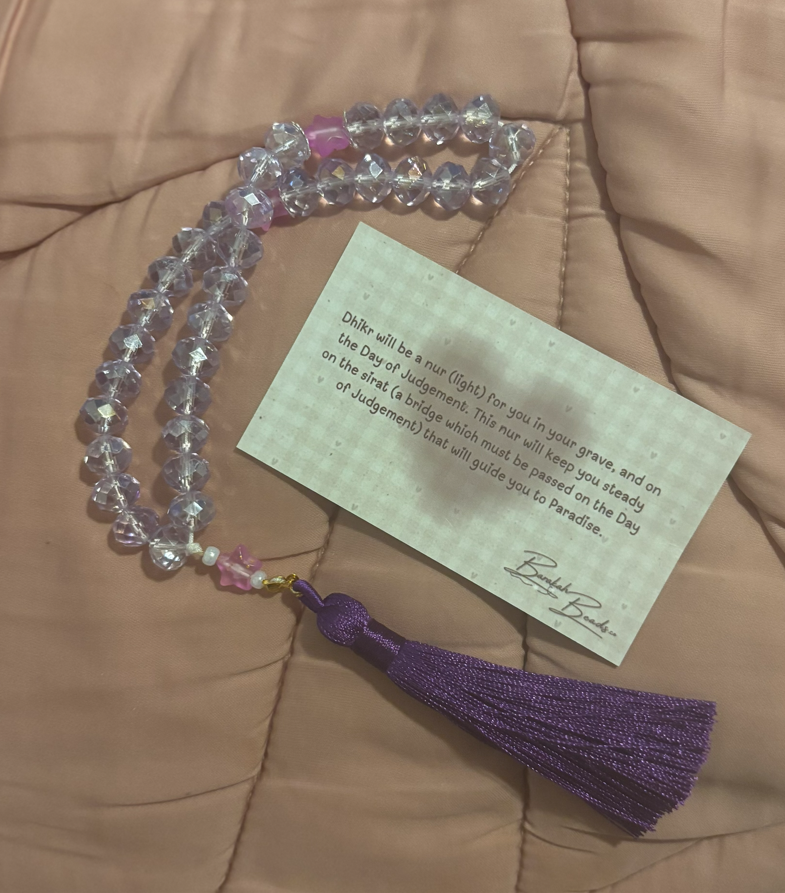
The interview came to a close with the interviewee gifting each of us an adorable purple handmade set of prayer beads with a message, “Dhikr (remembrance of God) will be a nur (light) for you in your grave, and on the Day of Judgement. This nur will keep you steady on the sirat (a bridge which must be passed on the Day of Judgment) that will guide you to Paradise”. Thus came a sweet close and a smoothly sailing start to our documentary. 

Image of prayer bead gift

There is still so much we would like to uncover as there were a few questions that our interviewee felt would be best suited for the Imams and regular attendees at the Mosque. Stay tuned for next week while we begin editing the documentary and continue conducting interviews with Regent Park residents and a few Imams at Masjid Omar bin Khatab! In the meantime, please see this vlog showcasing short clips from the day of the interview!

The team members of Resilience and Faith are Tracy Ikpekhia, Sama Abbas and Nashat Nawar.
Readjustment and Resilience: Getting Ready for Interviews

Last week when we left off at the Daniel’s Spectrum, group members of the Resilience and Faith group Nashat Nawar, Tracy Ikpekhia and Sama Abbas had just identified their project theme “Faith Amidst the Crisis of Tenant Displacement” and were off to a good start. This week, the group began developing interview questions and started the search for interview participants! 

When class began at the University of Toronto (UofT) St. George Campus, Professor Mehta walked students through the differences and similarities between academic and journalistic interviews. The students found that while academic interviews seem to focus mostly on data collection for the purpose of proving or disproving a hypothesis, journalistic interviews tend to take on a narrative arc through which individual voices are highlighted to a high degree. In fact, while structured journalism requires the development of a narrative, academic studies focus mainly on the processes of collecting and analyzing information (Lopezosa et al., 2023). Additionally, Professor Mehta walked the groups through expectations for how qualitative interviews are typically formatted. She mentioned that while beginning introduction questions provide the opportunity for breaking the ice between the interviewer and interviewee allowing for core questions to be answered comfortably, it is important to ask afterthought questions following the interview to add on to its depth.  

In preparing for interviews, the team tried to craft introduction, core and after thought questions that conveyed both academic and journalistic angles. For instance, while personal questions such as “how does faith play a role in navigating your daily life? Were included, the team also made sure to include questions such as “why do you think tenants experiencing displacement seek help and support from religious institutions?” to assess the general perceptions of the community on how religious leaders and institutions in Regent Park act as a source of support amidst the crisis of tenant displacement.  

After crafting the research questions, it was time to begin contacting people who would be interested in participating in interviews for the project. However, Sama let the group know that we would be met with a bit of difficulty; given that at the time of working on this project it is currently the month of Ramadan, this would pose as a bit of a challenge for us in contacting the Imams at Masjidur Rahmah since the people in positions of leadership are typically quite busy at this time of the year. Thankfully, Nashat knew of a UofT student living in Regent Park heavily engaged in work with the Muslim community and he was able to connect us with people with leadership positions in Masjid Omar Bin Khatab. While in class it was discussed that this mosque typically consists of a high Somali population, it strives to foster unity and belonging among a diverse community of members (Masjid Omar Bin Khatab, n.d.).  

One of the contacts he shared was of the daughter of one of the Imams at Masjid Omar Bin Khatab who helps with facilitating programs for women at the Mosque. The team is hoping to conduct an interview with her on March 11th alongside an Imam at the Mosque. In preparation for this interview, preliminary research on the history of Masjid Omar Bin Khatab in Regent Park will be conducted. As Tracy’s specialty is film, she is particularly very excited about taking B-roll shots at the Mosque and working her camera magic! 

Stay tuned to hear all about the process of this semi-structured interview next week! For an inside scoop on our planning process for the interview, please see this clip of one of our interview planning meetings. 

References  

Lopezosa, C., Codina, L., Fernández-Planells, A., & Freixa, P. (2023). Journalistic innovation: How new formats of digital journalism are perceived in the academic literature. Journalism, 24(4), 821-838. 

Masjid Omar Bin Khatab. (n.d.). Majid Omar Bin Khatab. https://masjidomarbinkhatab.ca/ 

 The team members of Resilience and Faith are Tracy Ikpekhia, Sama Abbas and Nashat Nawar.