
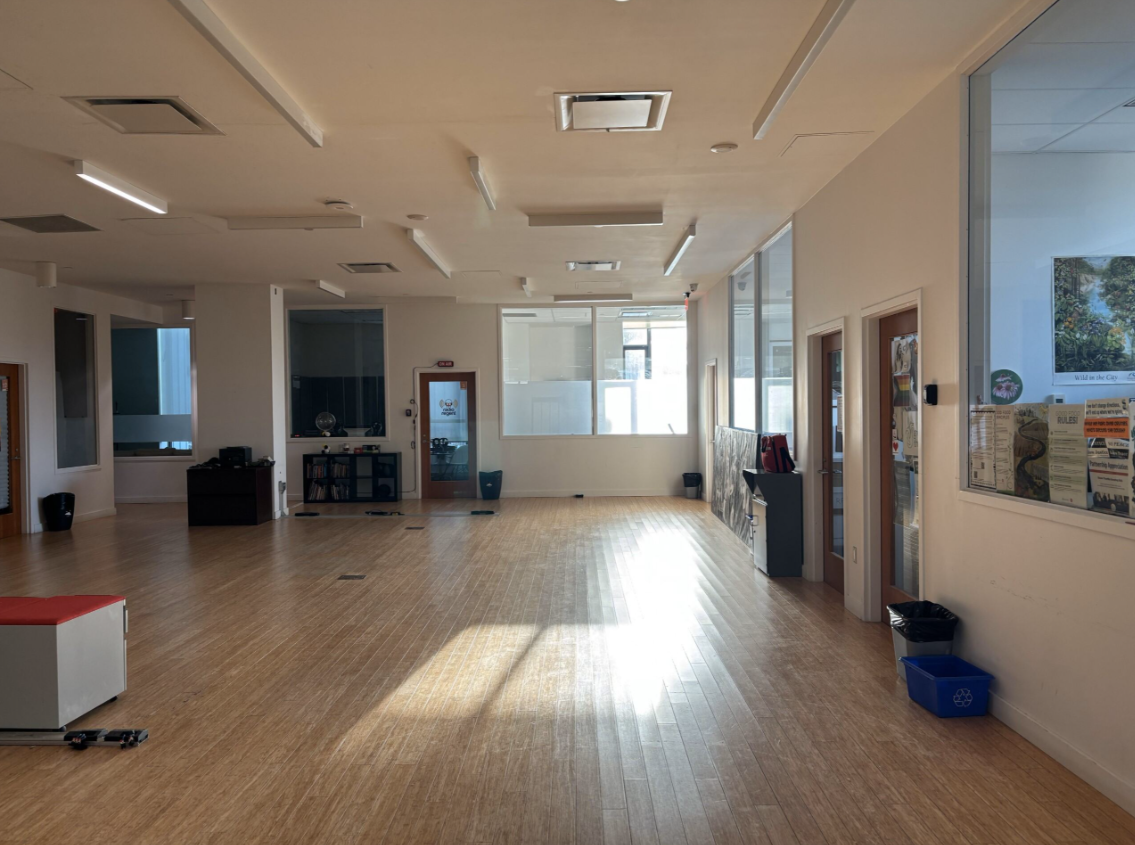
The Daniels Spectrum was quiet on the sunny Friday afternoon I spent in the Focus Media offices, editing our interview footage. As I played around with how to order the story, I wondered about what elements were essential to answering our research questions: What role does a community learn-to-DJ class play in facilitating social mixing across Downtown East communities? How does this community DJing class relate to Regent Park’s legacy of music production?
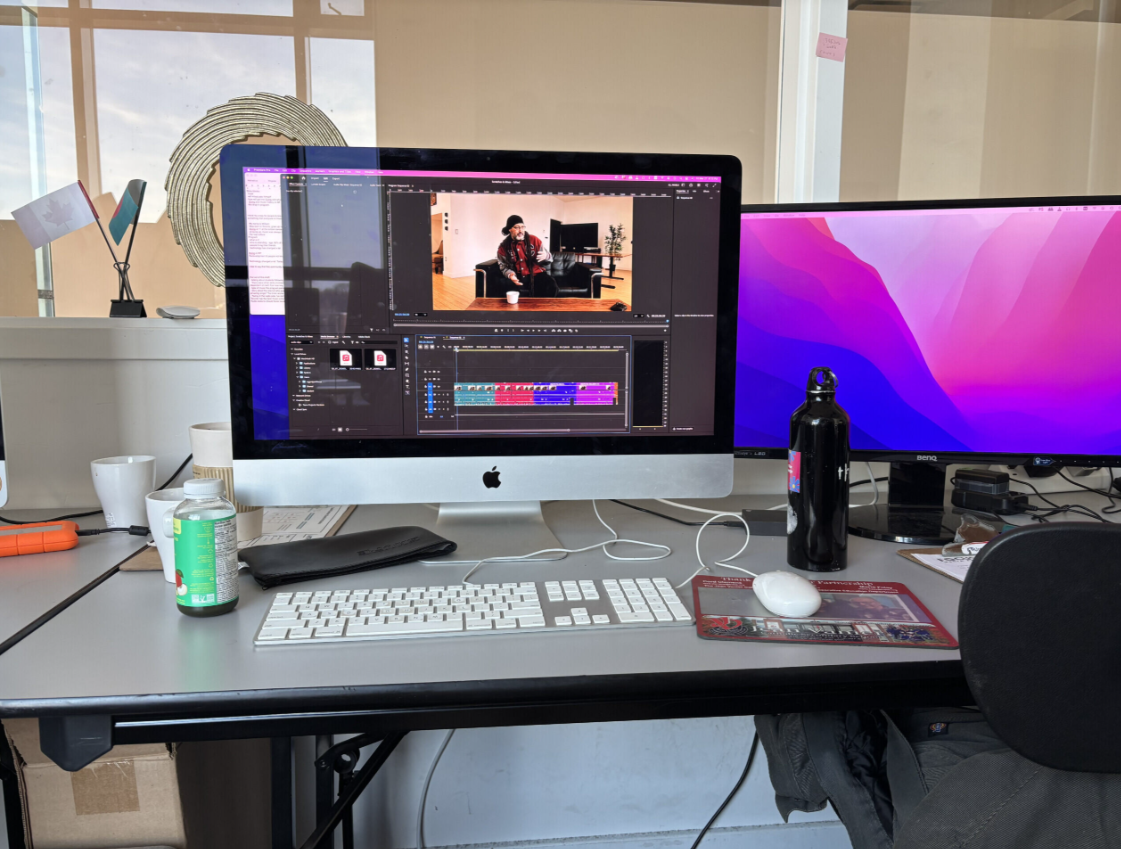
Over the past few weeks, we have had to adapt to the ups and downs of trying to produce a documentary on a very short timeline. The scope of the story we are trying to tell has expanded or contracted with every scheduled interview, cancelled interview, new work-around, or new contact found. At the heart of the project is still the goal of telling the story of a piece of Regent Park’s music history – how it survives today, is passed down to the next generation, and what it might look like moving into the future.
To our luck, we have a very compelling central figure in our story. Will, the instructor of the Learn to DJ Drop-In, was generous with his time and forthcoming with his answers to our questions. As a long-time downtown east resident, he spoke compellingly about the impact of the redevelopment, specifically on how Regent Park’s musical history is passed down, without requiring any prompting from us. Eventually, I ordered the narrative as follows:
Hook - music is important for everyone
Will introduces himself
How will got into DJing and what it means to him
DJing and music history in RP
The drop in program
Impacts of redevelopment
What does the future look like?
This order sets the scene by starting close up, zoomed in on what DJing means to one person growing up in Toronto’s downtown east before redevelopment. For Will, music was essential, always in his house, and gave him a role in his school community at the tender age of eleven, when he started picking music for school dances. The materiality of this story is compelling - he talks about the equipment he used as “Fisher Price turntables,” this image that ties together grown up Will with his first childhood forays into the hobby that would become his career.
In the next story beat, we connect DJing to community-building and to Regent Park as a whole, as Will explains how DJs are integral to hip hop culture, giving all the other artists (MCs, dancers, graffiti artists) a centripetal force to gather around. As he got involved with DJing, he would see the same people and know where they came from in the city. In Regent Park, Will says that some of the best DJs work in the neighbourhood, like DJ Grouch who teaches the Regent Park School of Music. He talks about artists including Point Blank and specifically suggests that we watch the music video for their song “Born and Raised in the Ghetto.” This part of the story has a significant gap, where I imagine we will expand more on Regent Park music culture through narration or using the additional interviews our group is recording this week.
Next, Will talks about the drop in program, how it is a low-barrier, choose-you-own-adventure program, where kids often bring their friends along and help younger participants. He credits this to the fact that Regent Park is especially community-oriented. Will also stresses the importance of giving youth something to do and somewhere to go where they won’t risk getting involved in dangerous activities. He credits his own involvement in DJing with keeping him out of trouble as a youth growing up in the area.
In the following section, Will answers my question about if youth in Regent Park have a sense of the musical history of the neighbourhood. He says “absolutely not,” and credits the redevelopment process and relocation of so many people with being part of what breaks that chain of memory and community knowledge. He elaborates that while he is all for improving the neighbourhood, many factors beyond financial stress kept people from moving back to Regent Park even though they had the right to return.
Our key finding so far is that the role DJing plays in a single event – bringing people together to dance – can be expanded to its role in the community at large. As a lynchpin of other art forms in hip hop culture, DJing is inherently community oriented. For kids in Regent Park, it can serve not only as a hobby, but as something that connects them to their peers, to their history, and to future opportunities. That said, the connection to history has been somewhat fractured by the redevelopment, as some of the people who carry those memories might not have come back to the ‘new’ Regent Park.
Editing is time consuming, and the finer details like music and b-roll are still missing, but the story is almost there. I still wonder how we will effectively communicate about Regent Park’s musical history if we have to be the ones narrating it.
The team members of Scratch’s & Mixes are David Scrivener, Lisa Truong, Hana Golightly & Neil Patel.